Bridging the Gap in Transport Management: A Practical Approach by Rise SA
According to the Department of Transport South Africa, more than 80% of all goods in South Africa are transported by road.
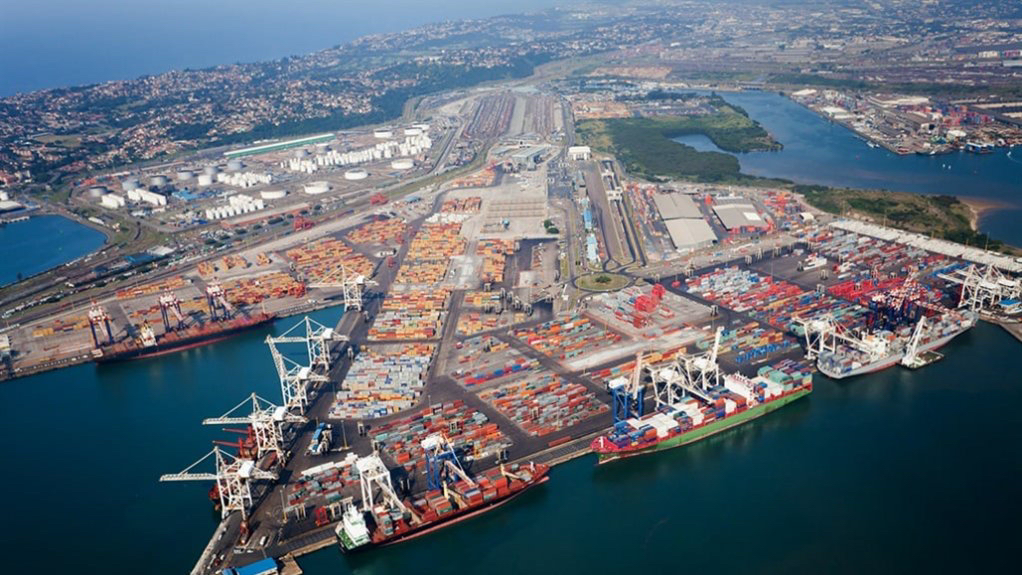
This is particularly visible along the Durban–Gauteng corridor, which connects the Port of Durban — the country’s main container port — with Gauteng, its primary economic hub.
According to Transnet and industry reports, this corridor carries the majority of containerised freight and operates under constant pressure, with capacity constraints and operational disruptions affecting flow.
At the same time, rail infrastructure has struggled to keep pace in both capacity and reliability, shifting even more demand onto road transport.
As trade volumes increase, this demand concentrates along already constrained routes.
For transport companies, this creates a very specific operating environment: higher volumes, tighter timelines, and increasing complexity, particularly in cross-border logistics.
In practice, businesses grow their operations step by step. New tools are introduced as problems appear, but rarely as part of a single, structured system.
Over time, this leads to a fragmented set of systems.
Companies do have the data — but it is scattered across different systems and not integrated. As a result, decisions are often made with only part of the picture.
This becomes visible in everyday operations. Trucks return empty while there is demand for backhaul. Available capacity is not always visible in time.
In one of the recent industry discussions, a logistics operator described a typical situation: the same shipment had to be documented multiple times in different formats for different African markets. The data existed — but it could not move across systems without being re-entered.
Connecting What Already Exists
At Rise SA, we approach this as a systems problem rather than a single-product problem.
Our work focuses on localising 1C Fleet Management and using the broader 1C platform to connect existing processes into a single working environment.
The goal is not to replace everything, but to make existing systems work together.
The platform supports integration with both legacy systems and modern cloud services — through APIs, JSON, and standard web technologies. This allows companies to connect systems step by step, without disrupting operations.
Rethinking Enterprise Systems in the South African Context
Many organisations in South Africa have already invested in large-scale enterprise systems.
However, in practice, a different picture often emerges.
In industry discussions, it is common to hear that companies carry significant licensing and support costs while using only a limited portion of system functionality. At the same time, there is a persistent shortage of local specialists capable of implementing and maintaining these systems.
This is not only a technical issue, but a structural one. Skilled professionals are highly mobile and often relocate to international markets, while ongoing support is provided remotely at a much higher cost.
Companies invest in training, but retaining qualified specialists remains a challenge, making long-term system ownership difficult.
As a result, businesses are left with systems that are expensive to maintain, difficult to evolve, and not always aligned with day-to-day operational needs.
In many cases, companies continue to rely on manual processes and disconnected tools alongside these systems, simply to keep operations running.
This creates a gap between the level of investment and the level of operational control companies actually achieve.
Why Mass-Market Solutions Matter
Transport is a scale-driven industry.
Managing fleets, fuel, routes, and documentation across multiple locations requires systems that are not only flexible, but proven in real operational environments.
Mass-market platforms play a key role here — not as simplified tools, but as systems designed to handle everyday operational complexity at scale.
Solutions such as 1C Fleet Management are built around this idea: standardised, adaptable, and ready to be deployed in environments where operations cannot stop.
In large fleet environments, fuel is one of the biggest cost components. Even small inefficiencies quickly translate into measurable losses.
With fuel prices remaining volatile, the ability to monitor consumption, detect anomalies, and control usage becomes a direct financial lever.
The same applies to fleet utilisation. Better visibility of available capacity allows companies to reduce empty runs, improve backhaul planning, and make better use of existing assets — without expanding the fleet.
In this context, the value of a system is not in adding complexity, but in bringing consistency and control into everyday operations.
Localisation in Practice
Localisation is not only about language. It is about aligning the system with how businesses actually operate.
This includes adapting terminology, workflows, and data structures to reflect real operating conditions in South Africa.
We are also working with municipalities, where there is increasing demand for better control over transport operations and resource usage.
Building Capability Alongside Technology
Technology only works when there are people who can use and support it.
Rise SA works in collaboration with University of Johannesburg, under the academic leadership of Dr Sebonkile Thaba, and with industry partner Stratmar Integrated Solutions.
More than 60 students are currently completing training in transport and fleet management.
Following their first term, they will sit for certification exams on 14 May.
In parallel, short-format courses are being developed for the corporate sector — responding directly to market demand.
Moving Forward
The challenge in South Africa is not introducing new systems, but making existing ones work together.
As the transport sector continues to grow, the ability to connect systems, improve visibility, and reduce operational inefficiencies becomes increasingly important.
Rise SA focuses on addressing this gap — combining localisation, integration, and skills development to support companies in building more structured and efficient operations.